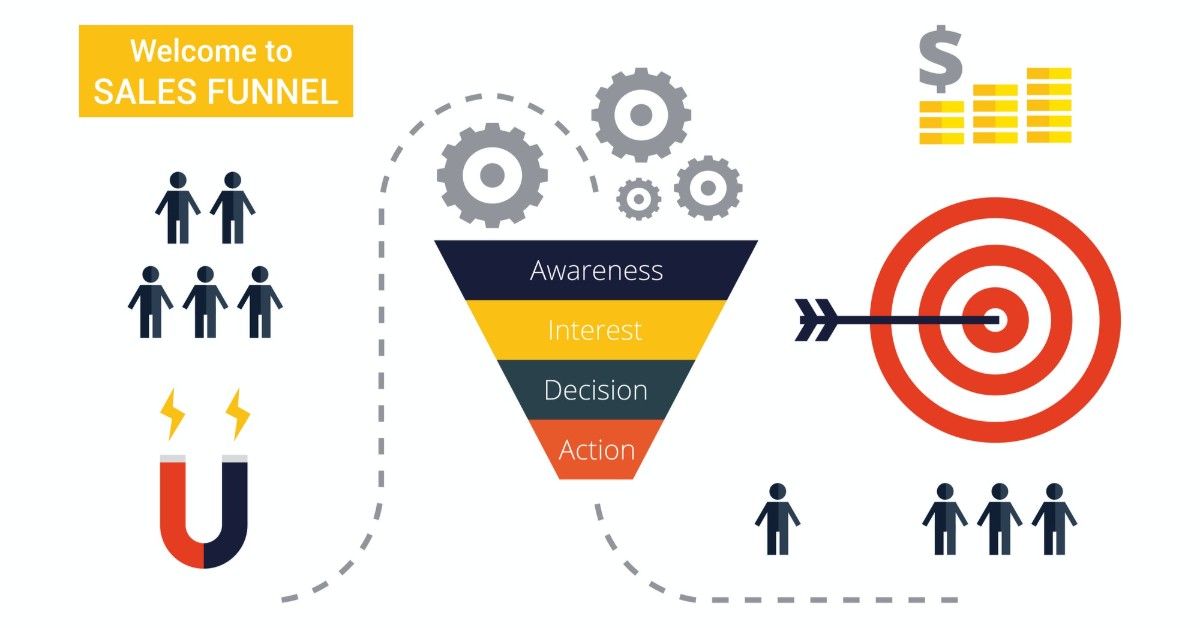
A decade ago, or so, the buyer’s journey was 70% sales and 30% marketing. Now those ratios have flipped. As an example, consider a car buyer – before stepping into a dealership, having a test drive, or selecting a make, there is considerable time spent learning about options, prices, and other customers’ experiences. The buyer has more control and requires more information before whittling down to their short list of potential suppliers. Think of the common sales funnel known as AIDA – awareness, interest, desire, and action. With more of the buyer’s journey spent in the top and middle of the funnel, marketers are well served nurturing leads from one stage to the next. There are three statistics often cited as benefits to doing so:
- When a business focuses on lead nurturing, they make 50 percent more sales
- Cost per order (CPO) is 33 percent lower
- Average Order Value (AOV) is 47 percent larger
A trifecta of good! With a clear understanding of objectives, this Holy Grail can be approached with the development of a robust nurturing program deploying a CRM (customer relationship management) system, careful tracking of metrics, thoughtful development of content and consistent branding across channels.
What is Lead Nurturing
One succinct lead nurturing definition (provided by leadspace.com):
“…Developing relationships with your leads and nurturing them through the buying process.”
According to many studies, between 50% to 95% of your leads are not ready to buy – especially when they are at the top of the funnel or the Awareness stage. Consumers want to know they are getting the best product, the fastest service or a fair price. As a result, there is a natural tendency to want to gather facts and take time before deciding. That impulse becomes even more pronounced for decisions that involve big ticket items with multiple stakeholders, especially when a pivotal decision at one stage implies a reduced range of options down the road. As questions arise, supply answers. Like the veritable rabbit hole, sometimes providing information in one area will prompt additional concerns. The companies that can continue the conversation(s) with relevant information, possibly in different formats and at different junctions are more likely to close the sale at a higher value.
How Do You Create a Lead Nurturing Campaign?
There isn’t a one size fits all strategy. The better a marketer is at each of these steps and the more able she can combine these elements, the probability of converting prospects into customers improves:
- Segment Your Audience
- Personalize your outreach, where possible
- Establish your criteria defining a quality lead, possibly supported by lead scoring
- Develop educational content suitable for email, newsletters, or eBook
- Have Product Demos
- Share useful announcements about upgrades or produce a White Paper
- Invite prospects to events or online seminars
- Retarget
- Survey
- Deploy video marketing
- Connect or share content with Leads on Social
- Have salespeople and material ready to engage qualified leads
- Set periodic calendar reminders to engage, especially if there is a personal contact
Varying surveys show that marketers need five to eight touches in their lead nurturing campaigns. To increase the odds of converting your leads into customers, you need to be omni-channel and plan to interact with them multiple times to lead them from the top to the bottom of the funnel. Once in your funnel, create marketing automations to help the journey. The triggers could be time-based, or action based.
At the Awareness stage, content needs to educate and answer questions to pain points. If an email address can be captured here, the nurturing can continue. During the Interest to Desire stage, share case studies or webinars that prove your thought leadership and start to make the case as to why prospects should consider you as a service provider. The bottom of the funnel, Action, can include demos, testimonials, value-based pricing, or low-risk trial services.

Keeping a customer is often more cost effective than finding a new one, so focus on renewals, referrals, or at least recommendations from satisfied clients. Have a system in place asking for feedback. Positive reviews allow your past customers to talk with your future customers while negative reviews are an opportunity to improve your operation or better understand more of customers’ pain points so that your firm can become a better provider. Extending the Customer Lifetime Value (CLV) becomes another way to turbocharge your Marketing efforts.
Larger organizations will need to make some effort to assure sales and marketing alignment. With that said, successful lead nurturing is a digital marketing strategy that is more than worthwhile as shown by lower customer acquisition costs, higher average sales, and improved conversion of prospects.
Stay Connected